
Get to Know the Turnpike
The West Virginia Turnpike
An 88-mile stretch of safe, scenic interstate that connects Charleston and Princeton and carries I-77 and I-64 across the mountain state.
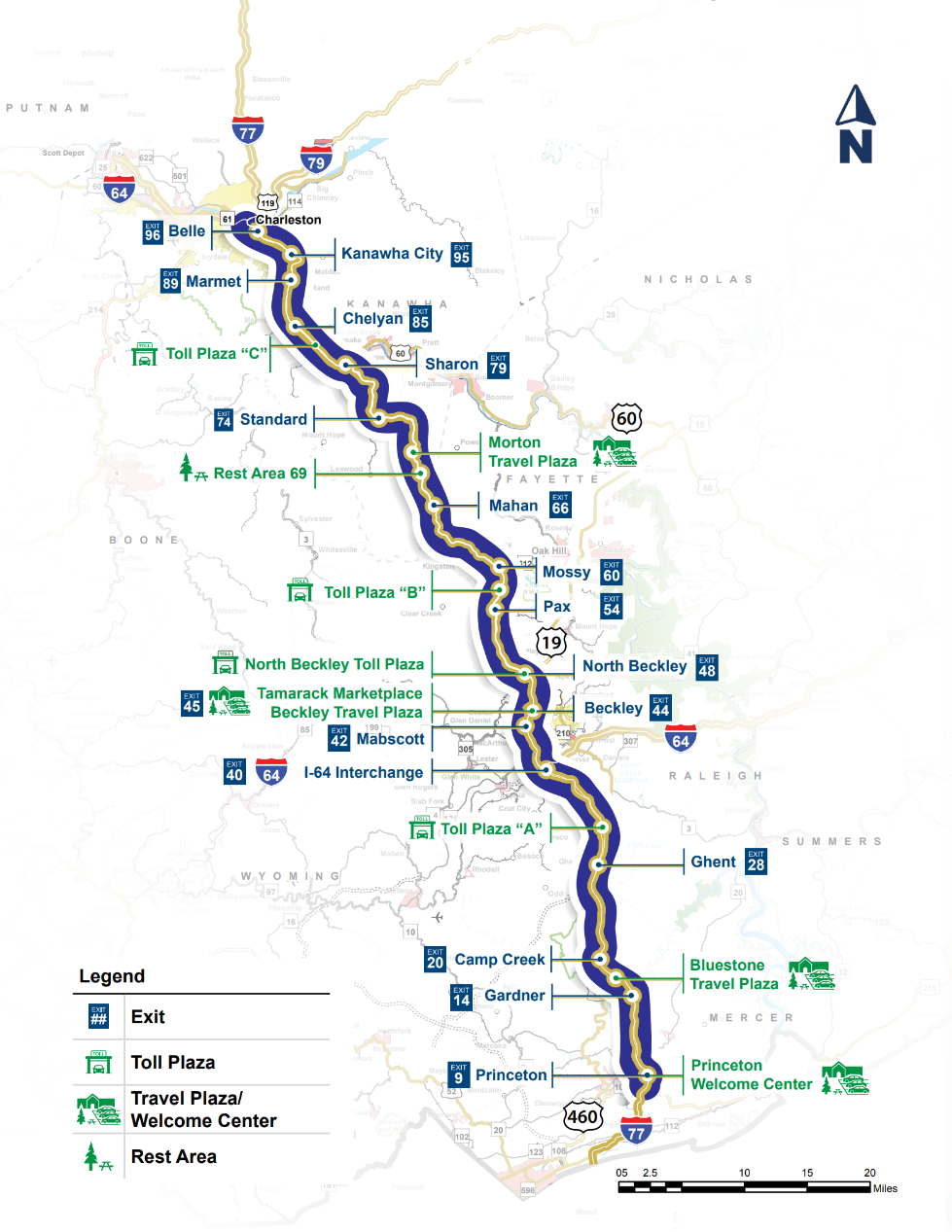
Turnpike Map
Explore the turnpike before you drive! This map highlights toll plazas, exits, and services along the route.

Four travel lanes along the corridor

Opened to vehicle traffic in 1954

12 million+ drivers each year
What You'll Find Along the WV Turnpike
88 Miles of Roadway
The Turnpike stretches 88 miles between Charleston and Princeton.

Toll Plazas
Drivers pass through three mainline toll plazas at Cheylan, Pax, and Ghent, and one toll plaza located on Route 19 at the North Beckley Exit (Exit 48).

Travel Plazas and Services
Three full-service travel plazas at Beckley, Bluestone, and Morton (opening Fall 2026) offer fuel, EV chargers, food, restrooms, and parking for cars and trucks.

Terrain Rising from 600 to 3,400 feet at Flat Top Mountain
The Turnpike climbs from the river valley near Charleston to more than 3,400 feet at Flat Top Mountain, giving drivers a mix of mountain views, valley crossings, and dramatic elevation changes.
Scenic Views and Engineering Highlights
The Turnpike is one of the most scenic interstate corridors in the region. It crosses more than 100 bridges spanning deep valleys, winding creeks, and rugged mountain terrain. Explore three of our featured bridges that honor West Virginia heroes.
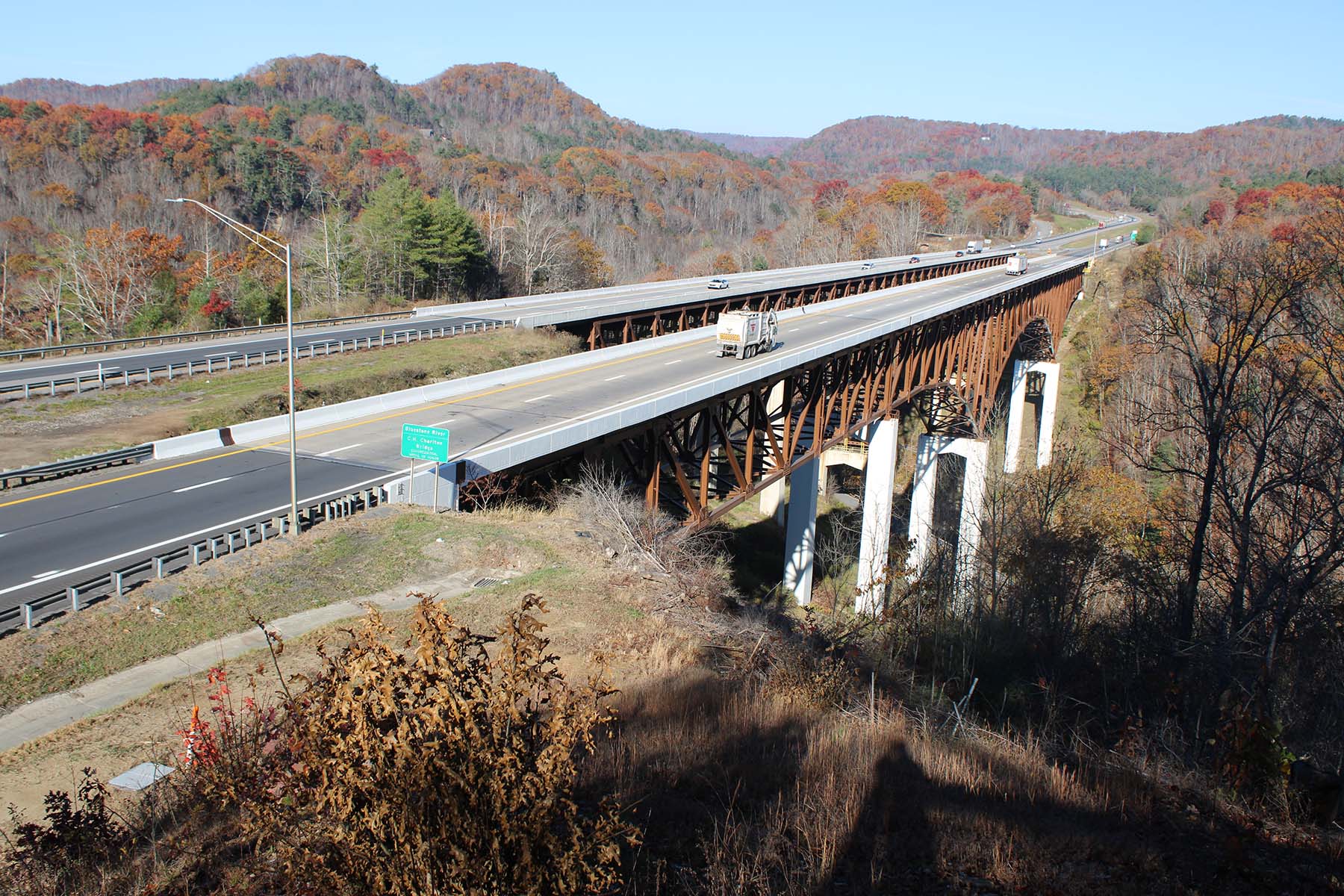
Sgt. Cornelius Charlton Bridge
Honors Sergeant Cornelius Charlton, a West Virginia-born Medal of Honor recipient whose bravery during the Korean War reflects the courage and dedication of the Mountain State’s service members.
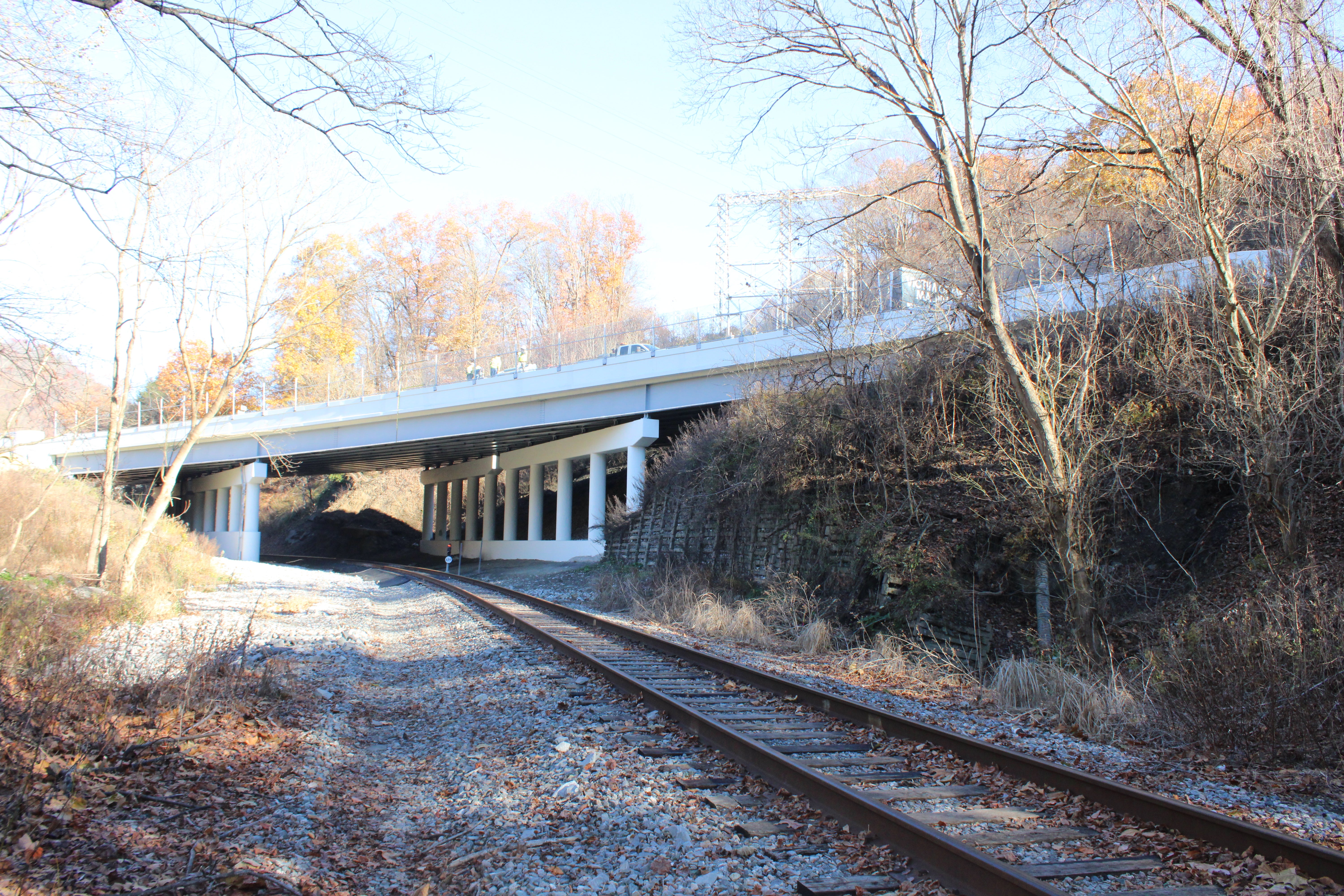
John H. Reed, Jr. Bridge
Named for U.S. Army Lieutenant Colonel John H. Reed Jr., a highly decorated World War II veteran recognized for his service across North Africa, Sicily, Italy, France, and Germany. The bridge honors his military service, lifelong public contributions in West Virginia and enduring legacy.
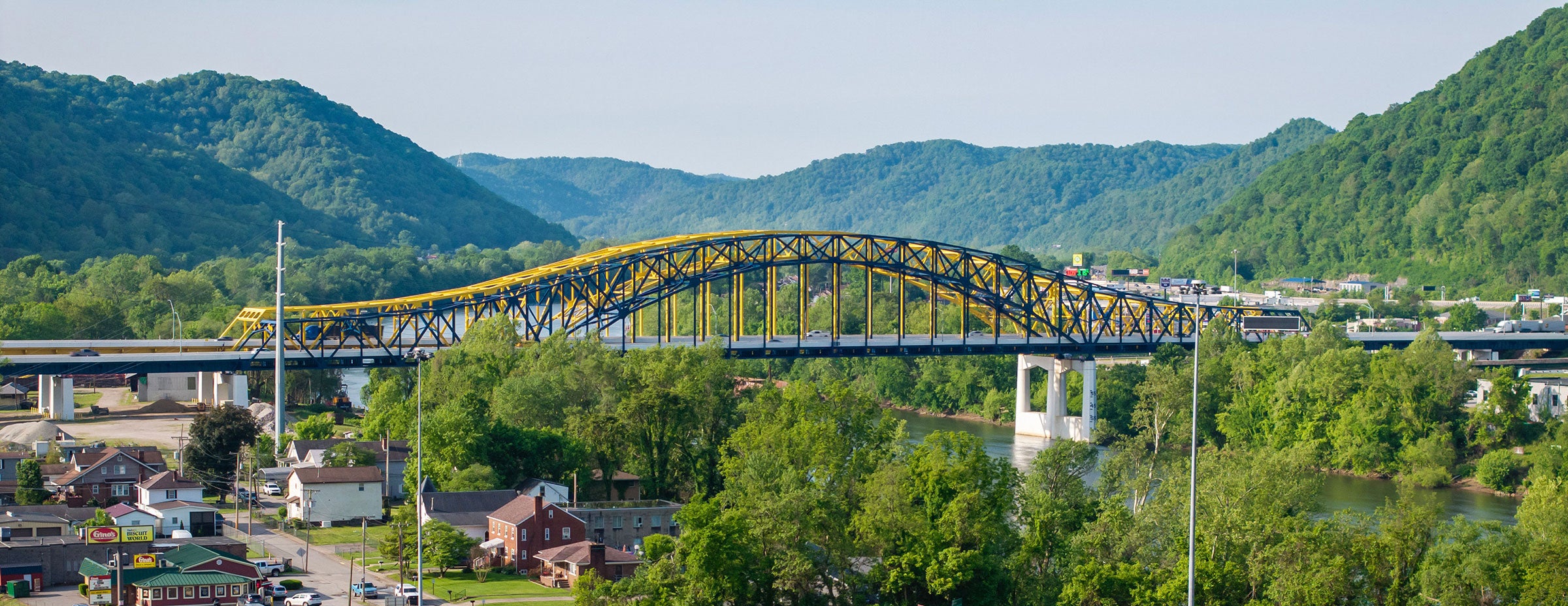
Chuck Yeager Bridge
Commemorates Brigadier General Charles E. “Chuck” Yeager, the pioneering West Virginia pilot who became the first person to break the sound barrier. The bridge celebrates his groundbreaking role in aviation history.
History of the Turnpike
The West Virginia Turnpike opened in 1954 as one of the most ambitious roadway projects in the region. Builders worked through steep mountains, deep valleys, and solid rock to create a safer and faster route between Charleston and Princeton. The original highway featured two lanes, tight curves, and steep grades, but reduced travel time by almost two hours compared to earlier mountain roads.
In the late 1970s and 1980s, major improvements were made to modernize the Turnpike. This work included adding lanes, straightening curves, and introducing new bridges and roadway sections. A 1.72-mile bypass replaced the Memorial Tunnel, which closed after the upgrade was completed in 1988. Today, the Turnpike carries both I-77 and I-64 and serves as a major north–south and east–west corridor in-state, out-of-state, and long-haul truck travelers. The route continues to be known for its remarkable engineering, scenic mountain views, and reliable travel experience.